

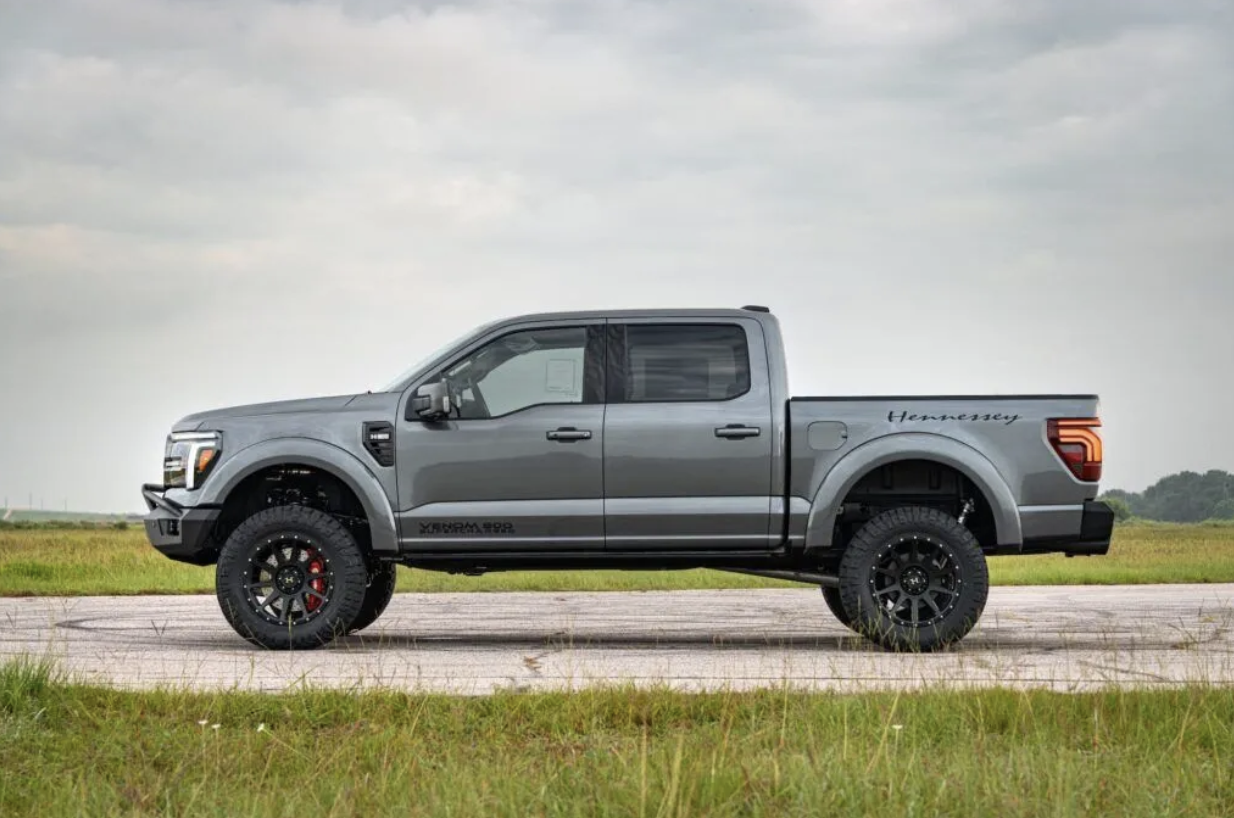

If you’ve ever wondered, “How much does a Ford F-150 weigh?”, you’re not alone. It’s one of the most common questions truck lovers ask, especially when comparing F-150 models or checking towing capacity and payload capacity. Whether you’re shopping for a new Ford or curious about your current truck’s specs, knowing the curb weight, GVWR (Gross Vehicle Weight Rating), and overall weight helps you understand just what your truck can do.
At Tomball Ford, we’ve helped countless Texas drivers find the perfect Ford F-150, from the rugged Raptor to the luxurious King Ranch, the efficient PowerBoost Hybrid, and the all-electric F-150 Lightning. Let’s take a friendly drive through the details and see what makes the F-150 such a capable, well-balanced truck.
The Basics: What Does “Weight” Mean for a Truck?
Before we talk numbers, it’s important to understand what truck weight really means. There are a few key terms to keep straight:
- Curb Weight: This is how much your truck weighs empty, no passengers, no cargo, no trailer. Just the truck with all standard fluids and a full tank of gas.
- GVWR (Gross Vehicle Weight Rating): This number includes your truck’s total allowed weight when fully loaded, passengers, cargo, and trailer tongue weight all combined.
- Payload Capacity: How much your truck can carry in the bed and cab.
- Towing Capacity: How much your truck can pull behind it.
The curb weight and GVWR work together to determine your payload. The difference between them equals how much your truck can safely haul. For example, if your F-150’s GVWR is 7,050 lbs and its curb weight is 4,800 lbs, then your payload capacity is 2,250 lbs.
So, How Much Does a Ford F-150 Weigh?
The Ford F-150 weight varies quite a bit depending on cab style, engine type, trim level, and even bed length. Generally speaking:
- Curb Weight: Ranges from about 4,000 to 5,700 pounds.
- GVWR: Ranges from about 6,100 to 7,850 pounds.
- Towing Capacity: Can go all the way up to 14,000 pounds, depending on setup.
That’s a pretty big spread but that’s part of what makes the Ford F-150 so versatile. You can go for a lighter truck for better fuel economy and easier maneuvering or a heavier build for towing heavy loads and serious off-road capability.
Comparing the F-150 Models and Cab Styles
The F-150 lineup offers several cab sizes and trim levels, each with its own weight distribution and functionality. Let’s look at the main cab styles:
Regular Cab
The Regular Cab is the simplest setup, two doors, one bench seat, and a straightforward, no-nonsense design. It’s the lightest F-150 option, with curb weights starting around 4,000 pounds. This makes it great for small jobs, city driving, or anyone who values fuel efficiency and practicality.
SuperCab
Next up, the SuperCab adds more interior room and small rear doors that open backward. This design offers a balance between work and play, room for a crew or family, plus a longer bed option for hauling. Its curb weight usually falls between 4,400 and 5,000 pounds, depending on engine choice and drivetrain.
SuperCrew
The SuperCrew is the most spacious cab style, four full doors and a roomy back seat that feels more like an SUV. It’s perfect for families, weekend adventurers, or anyone who needs both comfort and capability. Expect curb weights in the 4,700 to 5,700-pound range. The SuperCrew is also the most popular configuration we sell at Tomball Ford because it delivers everyday comfort without compromising power.
Trim Levels That Define the Drive
Ford gives drivers plenty of personality in their trucks. Here’s a quick snapshot:
- XL & XLT: Work-ready, dependable, and affordable. Great for job sites or light towing.
- Lariat: A favorite at Tomball Ford, luxurious touches, powerful V6 engine, and strong payload capacity.
- King Ranch & Platinum: Premium interiors, strong towing specs, and the best tech Ford offers.
- Raptor: Built for off-road thrill seekers, featuring a supercharged V6 EcoBoost engine, reinforced suspension, and aggressive design.
- Limited & Tremor: For those who want top-tier comfort or serious trail performance.
Each trim level can influence total weight, thanks to upgraded materials, additional features, and drivetrain options like four-wheel drive.
Engine Choices and Their Impact on Weight
The F-150’s engine options are a big part of what determines its total weight and fuel economy. Let’s break down a few popular ones:
- 2.7L EcoBoost V6: A great mix of power and fuel efficiency, offering up to 325 horsepower and 400 lb-ft of torque. Trucks with this engine tend to weigh a bit less, perfect for everyday driving.
- 3.5L EcoBoost V6: This engine cranks up the performance with 400+ horsepower and up to 500 lb-ft of torque, ideal for towing and heavy loads.
- 5.0L V8 Engine: A classic choice, known for its rumble and reliability. Excellent for those who need robust towing capacity.
- PowerBoost Hybrid: Combines a 3.5L EcoBoost with electric assistance for added torque, improved gas mileage, and impressive payload capacity.
- Electric F-150 Lightning: No gas engine here, just a battery pack and dual-motor setup. The overall weight increases (around 6,500 lbs), but the instant torque and quiet power make it a showstopper.
Each engine type offers its own charm. If you’re chasing fuel efficiency, powerful engines, or green innovation, there’s an F-150 for you.
How Bed Length and Drivetrain Affect Weight
Bed length and drivetrain are often overlooked when thinking about truck weight, but they make a big difference. Longer beds naturally add a few hundred pounds. Likewise, a four-wheel drive (4WD) system weighs more than two-wheel drive (2WD) because of the added components like the transfer case and driveshaft.
The Role of Weight in Towing, Payload, and Fuel Economy
The relationship between weight, towing capacity, and fuel efficiency is a balancing act. A heavier truck can pull more, but it also requires more power to move. Here’s how it plays out:
- Lighter trucks (like the 2.7L EcoBoost versions) are nimble, great for commuters, and deliver better gas mileage.
- Heavier trucks (with V8 engines or the Raptor’s setup) excel at towing heavy loads but sip a bit more fuel.
- The PowerBoost Hybrid and F-150 Lightning show how Ford’s modern engineering balances both ends, tons of torque with outstanding fuel economy.
If you’re ever unsure about your truck’s limits, check the owner’s manual for detailed specs on GVWR, payload, and towing capacity.
The 2024 Ford F-150: A Lighter, Smarter Truck
The 2024 Ford F-150 continues to refine its aluminum-alloy body and high-strength steel frame for durability without excess bulk. Many F-150 models are lighter than competitors, thanks to clever weight distribution and efficient design.
Ford also improved functionality with smarter tailgates, better tech, and new VCT (Variable Camshaft Timing) tuning for smoother power delivery. The result? A pickup that feels solid yet agile, ready for any Texas back road or Houston highway.
Final Thoughts: The Perfect Balance of Power and Practicality
So, how much does a Ford F-150 weigh? The short answer: it depends. The long answer: it’s perfectly balanced for your needs.
At Tomball Ford, we’re proud to stand behind this legendary truck. It’s not just about numbers or specs, it’s about tradition, innovation, and that feeling when you start the engine and know you can take on whatever’s ahead.
So, if you’re hauling, towing, or just cruising through Tomball, you’ll know your Ford F-150 has the perfect weight distribution, powerful engines, and smart design to handle it all.
